Over the last decade, software creation and functionality have undergone a major shift. In the past, all applications were based on rules-based, explicit programming, written by engineers manually. Each and every action that a piece of software could perform was painstakingly programmed, tested, then deployed. This approach severely restricted the scalability, adaptability, and reusability of digital tools. Software could only react to scenarios that were explicitly and proactively programmed by developers.
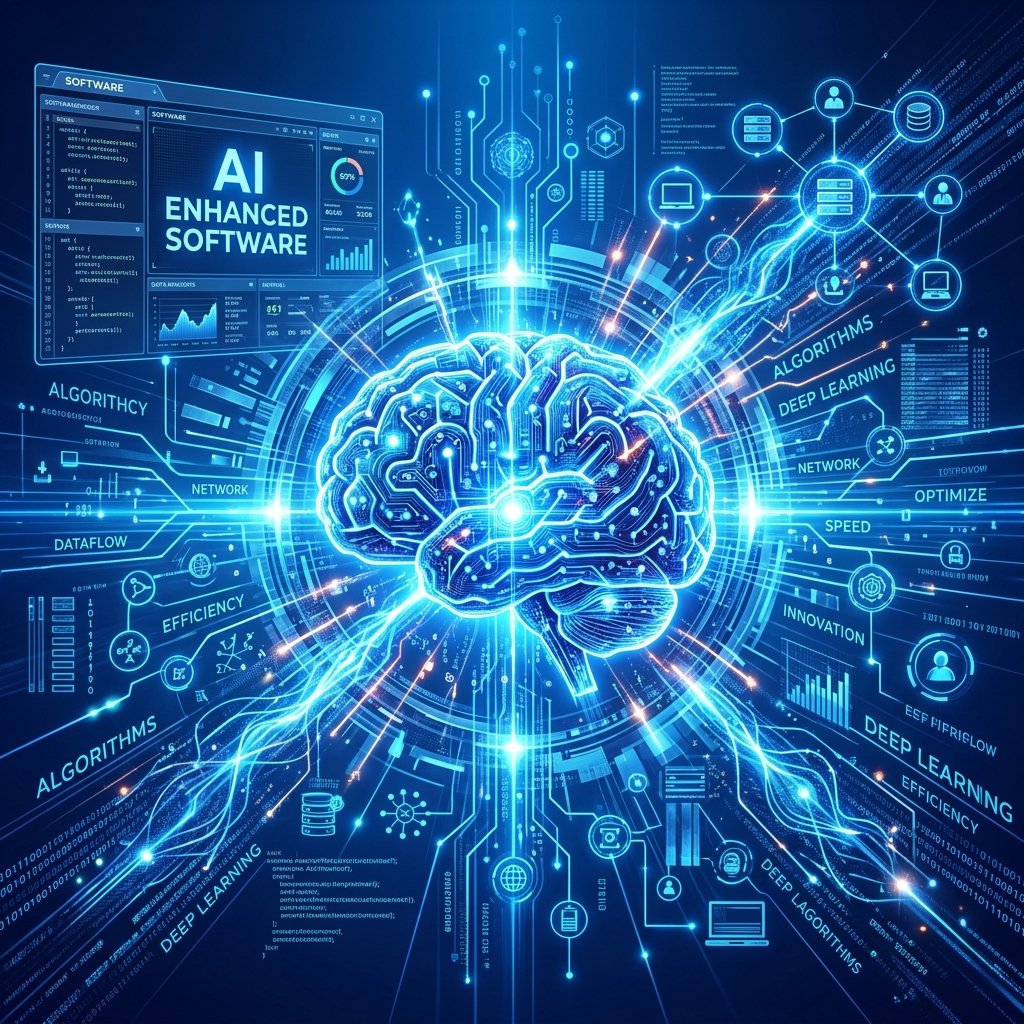
Artificial intelligence has fundamentally changed the way software is developed and operates in real time. By integrating advanced algorithms, developers can create apps that adapt to data inputs and learn from the user’s behavior. They can also optimize their performance without constant human intervention. This change transforms software from a static, non-thinking tool into a dynamic partner that can handle complex, unstructured issues.
Artificial intelligence is a powerful tool that can help organizations improve their operational efficiency and reduce time to market. Human programmers are no longer able to handle the complexity of digital applications. Artificial intelligence fills the gap by providing the computational and learning abilities required to build next-generation digital infrastructure.
AI-Powered Development is Changing Coding
Artificial intelligence assists software developers in a proactive manner by automating code writing and identifying errors before the software is released. AI-powered coding assistance analyzes billions of lines in open-source code and suggests complete functions, optimizes existing scripts, and flags potential security vulnerabilities. This dynamic support reduces the amount of time that developers spend on routine tasks such as programming and debugging. Engineering teams can now focus on innovative features and complex architectures rather than hunting for missing semicolons or other syntax errors.
Why Predictive Analysis is Important for Modern Applications
Predictive analytics uses historical data, statistical algorithms, and software environments to predict future outcomes. Software can adjust its operations proactively by analyzing user behavior and system performance metrics. Enterprise resource planning software, for example, uses predictive models to predict supply chain bottlenecks. This allows them to automatically adjust orders of inventory before shortages happen. This prevents downtime that can be costly and provides a seamless user experience.
Natural Language Processing and User Experience
Software can understand, interpret, and respond in meaningful ways to human speech using natural language processing. It is the technology behind virtual assistants, customer service chatbots, and other applications that users interact with daily. They can communicate with these applications by using conversational speech instead of rigid commands. Software can respond contextually and accurately by analyzing the intent and nuances of text and voice inputs. This integration is so deep that it makes the applications accessible to users who are not technically minded and improves customer satisfaction.
Machine Learning and Self-Optimizing Systems
As software processes more data, machine learning algorithms improve performance. The software does not require developers to create new rules for each edge case. Instead, it recognizes patterns and improves its operational models. This capability is crucial for fraud detection systems within banking software, which continuously learns the subtle differences between legitimate and fraudulent transactions. These systems improve their accuracy organically as they ingest daily new transaction data, allowing them to provide robust security without constant updates.
Automating and optimizing your business
Artificial intelligence automates complex workflows, which previously required human supervision. Artificial intelligence is now used by IT service management software to route support tickets automatically, diagnose hardware problems, and even distribute software patches across a global network. This optimization level reduces the workload on IT departments and ensures system resources are dynamically allocated based on network demand in real-time. Software can be self-healing and maintain peak performance even under changing workloads.
AI Software: Ethical and Legal Issues to Consider
Artificial intelligence integration into software poses significant challenges in terms of data privacy, algorithmic bias, and transparency. Machine learning models are trained on large datasets. Any historical biases in the data can be amplified, resulting in discriminatory outcomes such as hiring or lending. The “black box” nature of complex neural networks makes it hard for developers to explain how an application came to a particular decision. To ensure that their AI-powered software is fair, secure, and compliant with international privacy regulations, organizations must implement strict ethical guidelines, as well as a continuous auditing process.
Future Landscape of Intelligent Applications
In the next evolution of artificial intelligence software, highly autonomous agents will manage entire digital ecosystems. Future applications will be able to communicate directly, negotiating data transfers and optimizing resources without the need for human input. In the future, software will write its own updates and customize its interface based on user psychology. It will also anticipate business needs even before executives do. This hyper-intelligent, interconnected software environment will be the foundational layer of all global industries.
Adopting the Next Generation of Software
Artificial intelligence is the undisputed driving force behind some of the most intelligent and fastest software created. These intelligent systems redefine what digital tools are capable of by automating development, anticipating user needs, learning continuously from massive data streams, and automating the process. AI-powered software that is ethically managed and adopted by organizations will give them a huge competitive advantage. Business leaders need to assess their technology stacks immediately and find ways to integrate machine learning and predictive analytics in their core operations.
FAQs
1. What are the benefits of AI in software development for you?
The main benefit is the massive increase in software development speed. Artificial intelligence automates repetitive tasks in coding, identifies vulnerabilities during the writing stage, and suggests optimizations. This allows developers to deploy robust apps much faster.
2. What is natural language processing, and how does it improve software accessibility?
Natural language processing allows software to be interacted with using simple text or voice, rather than complicated menus and technical commands. It makes it easy for anyone to use powerful consumer and enterprise applications without any specialized training.
3. Can artificial intelligence replace human software developers completely?
Artificial intelligence can’t replace humans in complex development projects because it lacks strategic oversight, creative problem-solving, and architectural planning. It is more of a powerful assistant, handling routine coding, debugging, and design so that humans can focus on higher-level design.
4. What is the algorithmic bias in AI applications?
Algorithmic bias is created when artificial intelligence learns from biased or flawed historical data. Unchecked software can automate and scale these biases, resulting in unfair and discriminatory decisions. This can damage users’ reputations and harm a company.
5. What is the difference between traditional software programming and machine learning?
In traditional programming, developers must write rules that are explicit for each action taken by the software. Machine learning enables the software to analyze data, identify patterns, and create its own rules without any human involvement.