
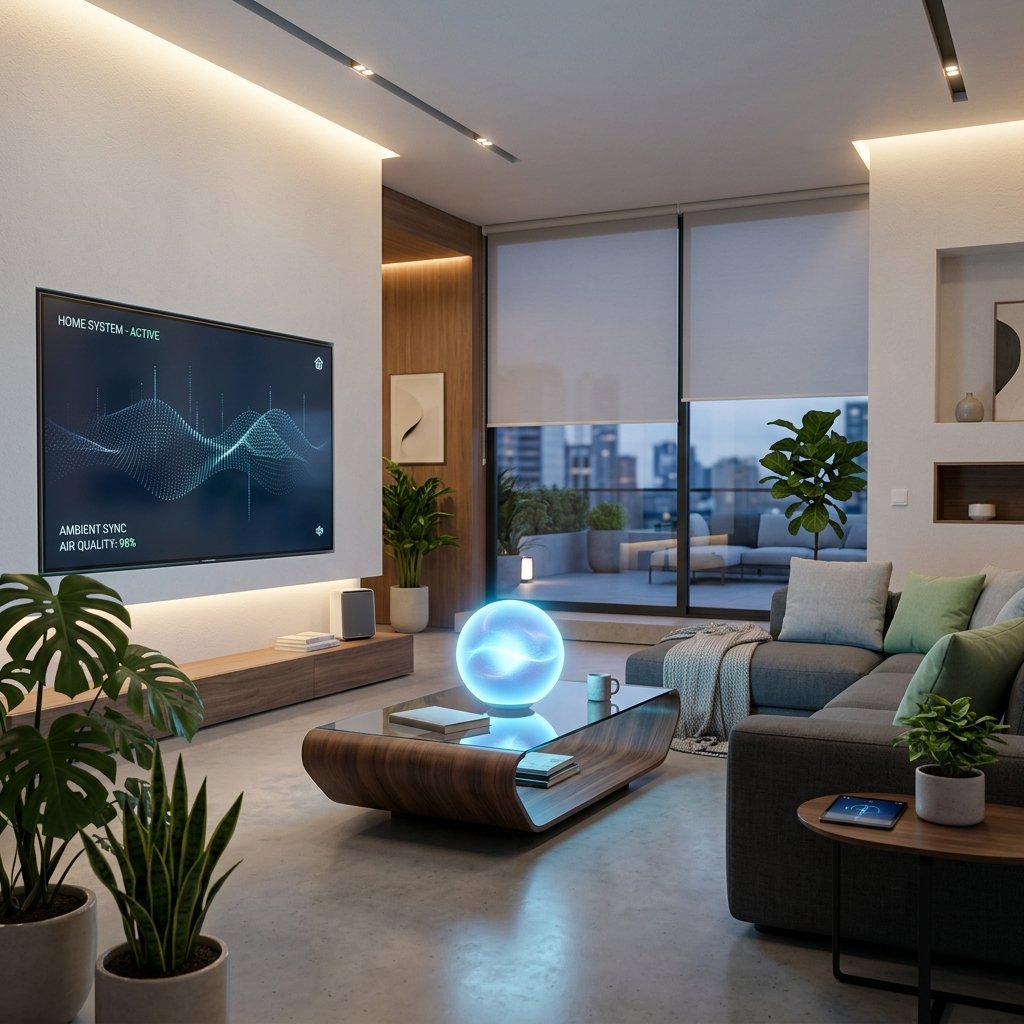
The living spaces have changed dramatically over the last decade. In the early days of smart homes, users had to navigate through multiple applications to adjust the thermostat or turn on the lights in the living room. Artificial intelligence has fundamentally altered this dynamic. Modern smart home platforms do more than just follow direct commands. They also observe and anticipate user needs, automate complex tasks, and monitor habits.This transition from reactive to proactive environments reduces the mental burden of managing a home.. Homeowners do not need to micromanage technology. Artificial intelligence is a silent, invisible assistant who handles all the technical details. Residents can focus on their own personal space and time.
The Brain Behind Your Home
Artificial intelligence is the brain of modern home spaces. Earlier smart devices worked in isolation. A smart plug could not communicate with a thermostat. Artificial intelligence fills in the gap by acting as an analysis hub for all connected devices. Artificial intelligence evaluates context immediately when a motion detector detects movement at night in a hallway. It looks at the time, determines ambient light levels, and gently increases the brightness of the hallway lights to 10%. The home can respond intelligently to the real world rather than simply following rigid schedules. The system constantly learns from everyday interactions and refines its responses so that they better match the lifestyle and preferences for the people who live inside the home.
Seamless Integration
Consumers are frustrated by the difficulty of connecting different devices and brands. Artificial intelligence removes compatibility barriers between disparate technologies by standardizing communication. Modern AI platforms translate the different digital languages used by manufacturers using advanced protocols. Artificial intelligence allows you to buy a security camera, smart blinds, or temperature sensor all from different companies. The system will understand that you’re leaving when you lock the door. The system lowers the window blinds, arms the security cameras, and pauses robotic vacuum cleaners so that they do not trigger motion alarms. It is not necessary for the homeowner to use three different applications to activate these events. Artificial intelligence is able to understand the goal of the project and handle all background communication instantly.
Personalized Living
Artificial intelligence can adapt the environment for each household’s unique rhythms. Machine learning algorithms determine when and how you use each room in your home. Artificial intelligence will automatically prepare your living room if you watch movies there every Friday at 8 p.m. The artificial intelligence will dim overhead lights and lower the temperature to make the room more comfortable. It will also turn on the TV’s background bias lighting just before you sit down. The system can identify different family members based on their smartphone, wearable device, or voice. The smart speaker could play an energetic morning playlist when a person enters the room. The system will switch to the news briefing of the person who enters the room after a few moments. The technology adapts to the user, rather than forcing them to adjust to it.
Peace of Mind and Security Enhanced
The traditional home security system relied on simple motion sensors and tripwires, which often triggered false alarms due to pets or cars passing by. The use of artificial intelligence in domestic security systems allows for advanced audio and visual analysis. Modern smart cameras can process local video feeds to differentiate between a dog wandering the streets, a tree branch swaying, and a person approaching the front door. Artificial intelligence can recognize a package dropped off by a driver and send a notification. The system will activate floodlights and lock all doors if it detects an unknown person loitering near the garage after midnight. It will also send a high-priority alert to the homeowner. Smart smoke detectors with artificial intelligence are able to distinguish between a burnt piece of toast and a structural fire by analyzing the chemical composition in the air. This precision helps to prevent unnecessary panic and ensures immediate action in real emergencies.
Sustainability and Energy Efficiency
AI-driven energy optimization has made it effortless to manage domestic power consumption. Artificial intelligence can reduce energy consumption without compromising comfort. Heating and cooling are the largest residential energy expenses. Smart thermostats use weather forecasts and other factors, such as the thermal properties of a home, to determine the best way to maintain the ideal temperature. The system could pre-cool a house at off-peak times when electricity is cheaper or turn off climate control in unoccupied rooms. Artificial intelligence monitors electrical consumption of each appliance. The system will alert the homeowner if a refrigerator starts to consume unusually large amounts of energy. The compressor could be failing or that the door seal requires replacement. AI platforms optimize the way power is consumed and distributed, allowing homeowners to reduce their carbon footprint as well as their utility bills.
The Future is now.
Artificial intelligence is expanding rapidly in domestic environments. We are moving towards predictive maintenance where the home actively monitors itself in terms of structural and mechanical health. Water sensors near plumbing fixtures detect micro-leaks and instruct smart valves to turn off the main water supply. This prevents catastrophic flooding. AI is now being integrated into health and wellness products. Smart beds monitor sleep quality, and they communicate with home lighting and temperature control systems to create the optimal conditions for deep sleep. Smart speakers will be able to interact with your home in a conversational way as generative artificial-intelligence models are integrated more into them. No need to memorize specific commands. You can tell your home you are feeling chilly, and artificial intelligence will decide the best way to heat the room according to the context.
The Future of Your Smart Home
Artificial intelligence can change the relationship between you and your home. The technology turns a static house into an active participant in your daily routine. Artificial intelligence can give homeowners their most precious resource back: time. It does this job by handling complex integrations and optimizing energy use, as well as providing robust security. This transition doesn’t require an immediate massive investment. Start with one intelligent hub, and add compatible devices over time as your needs change. The management of smart homes will become even more inconspicuous as these systems get more sophisticated.
FAQs
1. How does artificial intelligence learn my daily schedule?
Artificial intelligence uses machine learning algorithms to track your manual inputs and their frequency over a period of several weeks. The system will record your actions, such as when you turn on certain lights or adjust the thermostat at the same time every day. Once a pattern is established, artificial intelligence automates the specific tasks to anticipate your needs.
2. Can artificial intelligence still work if I lose my internet connection?
To maintain continuous operation, modern smart home platforms rely more on local processing than cloud computing. The artificial intelligence hub located in your home can still perform scheduled routines, activate lights, and process sensor data without an active Internet connection. The internet is required to use complex voice recognition and remote access via your smartphone.
3. How can artificial intelligence extend the life of my appliances and how do I improve their lifespan?
Artificial intelligence monitors standard operating parameters of connected appliances and their energy consumption patterns. Artificial intelligence will flag anomalies if a device starts to use an abnormal amount of electricity or is taking longer to complete a cycle than normal. The artificial intelligence alerts you that minor maintenance is needed before the issue becomes a costly mechanical failure.
4. Does artificial intelligence protect my privacy?
The privacy of users is prioritized by reputable artificial intelligence platforms. They process sensitive data such as video footage from security cameras and voice recordings locally, on the device hub, rather than sending it to an external server. The primary application settings allow you to control the data sharing permissions. Review the privacy policies of any smart home ecosystems you are considering to make sure they don’t sell your data to advertisers.
5. Do I have to purchase all new devices in order to use artificial intelligence?
Artificial intelligence does not require you to replace all electronic devices in your home. Smart plugs are an inexpensive way to connect lamps, coffeemakers, and fans with your artificial intelligence hub. The AI system can then control the power supply to “dumb” older devices. This effectively integrates your existing appliances into a modern smart home ecosystem.