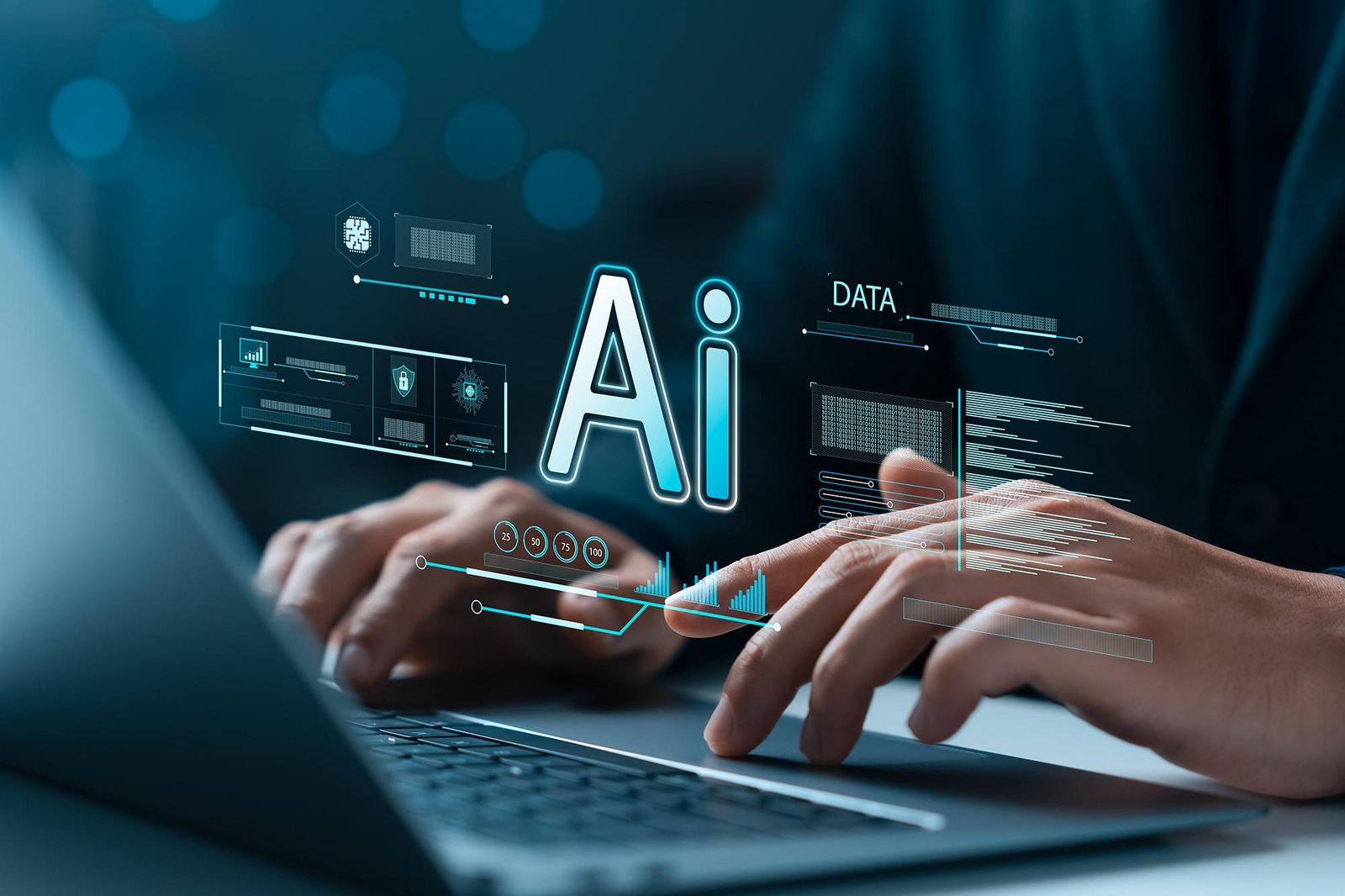
IT leaders need to evaluate new performance metrics as AI technology becomes more prevalent on laptops. Machines with ample RAM, SSD storage, and powerful processors that can support AI applications should be prioritized. Local language processing can increase productivity and speed by reducing delays when sending data to the cloud.
1. AI-Ready Processors
The current AI-ready processing discussion tends to revolve around one metric, trillions of operations every second (TOPS). TOPS is a measure of how many 8-bit integer operations a chip is able to perform each second.
AI-ready laptops have dedicated AI processors, which are usually integrated into the CPU. This additional hardware allows AI workloads to run locally, increasing responsiveness, battery life, and security while reducing cloud processing requirements. These AI acceleration features on the device can be used in conjunction with Surface Copilot+, Windows security features, and enterprise management to help IT teams standardize devices and streamline deployments.
2. AI-Ready Memory
AI-ready laptops are equipped with powerful processors, optimized frameworks for software, and dedicated GPUs that accelerate complex workloads. They’re ideal for professionals who work in AI, machine learning, or data science. AI workloads require significant memory consumption. It is important that the data they need to run (model weights/context windows, KV caches, and long-running agent state) be available at low latency.
Memory upgrades can help in certain ways, but AI systems soon hit obstacles imposed by the bill of materials costs, power budget restrictions, and physical design limitations that must be addressed through radical approaches. To bridge the gap.
3. AI-Ready Storage
These laptops have the power and speed needed to perform local AI processing. They also include an NPU that can offload tasks from CPUs or GPUs. These PCs also have power consumption optimized for long-term intelligent workloads.
Rapid data access is possible with fast storage technologies, such as advanced file systems and unified parallel architectures. Other features like mirroring, erasure coding, and snapshotting increase security and availability while routine maintenance and disk cleaning ensure that your AI laptop runs at its peak performance.
4. AI-Ready graphics
These laptops are equipped with advanced processors and graphics cards that can handle complex machine learning tasks, including deep learning models. These models are also equipped with features that save time for creatives and provide inspiration on demand. These systems are also capable of handling natural language processing tasks (NLP), thanks to their optimized hardware and software ecosystems. They also feature cooling systems that dynamically adjust fan speed to prevent overheating.
The trend of gaming AI is growing. Technologies such as AI-driven upscaling and real-time ray-tracing improve graphical fidelity. AI won’t be restricted by the internet anymore, as cloud-based apps were.
5. AI-Ready Network
Imagine a laptop that anticipates your requirements, streamlines workflows, and unlocks hidden potential for productivity. These AI-ready PCs are able to deliver on this promise thanks to powerful hardware, intelligent applications, and seamless integration of productivity tools. Efficiency becomes more important as AI workloads migrate from the cloud to the devices. Metrics such as TOPS (Terra Operations per Second) are critical, not just as marketing numbers, but also as indicators that the system can support AI applications on devices.
Rugged AI laptops offer this capability with NPU/GPU processors that are MIL-STD-810H certified, IP66/67 rated, and ATEX Zone 2 certified to work anywhere. Eliminating cloud dependency and subscription fees, while keeping TCO low over time.
6. AI-Ready Security
AI productivity tools are only a reality when the foundational work is done. Work design can be elevated to an organizational capability by implementing training and education programs to promote AI democratization and data literacy.
AI can be a costly experiment if it does not have access to high-quality, well-managed sources of data. It may also become inaccurate, biased, or even endanger privacy if the data is not managed properly. Thus, implementing essential data practices is essential.
7. AI-Ready Battery life
Dedicated AI hardware provides faster, more stable performance for a wide range of applications. Dedicated AI hardware delivers unparalleled results, from on-device assistants and real-time data analysis without the need for cloud connectivity.
Edge AI performs AI tasks on your laptop, rather than the cloud. This reduces latency and eliminates security risks associated with data transfer. This feature is particularly important when it comes to AI applications that deal with voice translation or facial recognition. Dedicated AI hardware ensures that your laptop is able to handle the intense processing power needed for on-device analysis. It provides more CPU headroom and better thermal design to improve cooling, battery capacity, and a systems-level solution for sustained AI workloads.
8. AI-Ready Design
AI-ready design ensures data is legible for machines by creating a structured structure. This may include using naming conventions and nesting components, as well as exposing structure via metadata.
AI adoption will be more sustainable for companies that strategically integrate AI into their organization. It may be necessary to break down legacy work processes and models into smaller tasks or redesign workflows in order to enhance human-AI collaboration.
Surface for Business devices with NPUs enable AI processing to be done on the device, reducing cloud connectivity requirements and latency. When selecting laptops to perform AI, IT leaders should consider TOPS scores, performance consistency, support for enterprise deployment and security, and lifecycle management.
9. AI-Ready Performance
To achieve AI-driven productivity, organizations need to invest in four pillars for AI readiness.
People: This component includes providing employees with appropriate skills and training. It also involves creating an agile culture that embraces continuous learning and redesigning processes in order to optimize human-AI collaboration.
By analyzing the core elements of a business process, it is possible to identify inefficiencies, and AI-powered optimization can be used for a variety of purposes, such as automating tasks or leveraging innovative technologies, like workflow automation, data-driven insights, etc.
Hardware that is designed for AI can accelerate performance because it processes information locally, rather than using cloud servers. This reduces latency and keeps sensitive information away from the internet. Laptops that support TOPS (Tera Operation Per Second) can run AI applications without overheating the battery or causing it to drain.